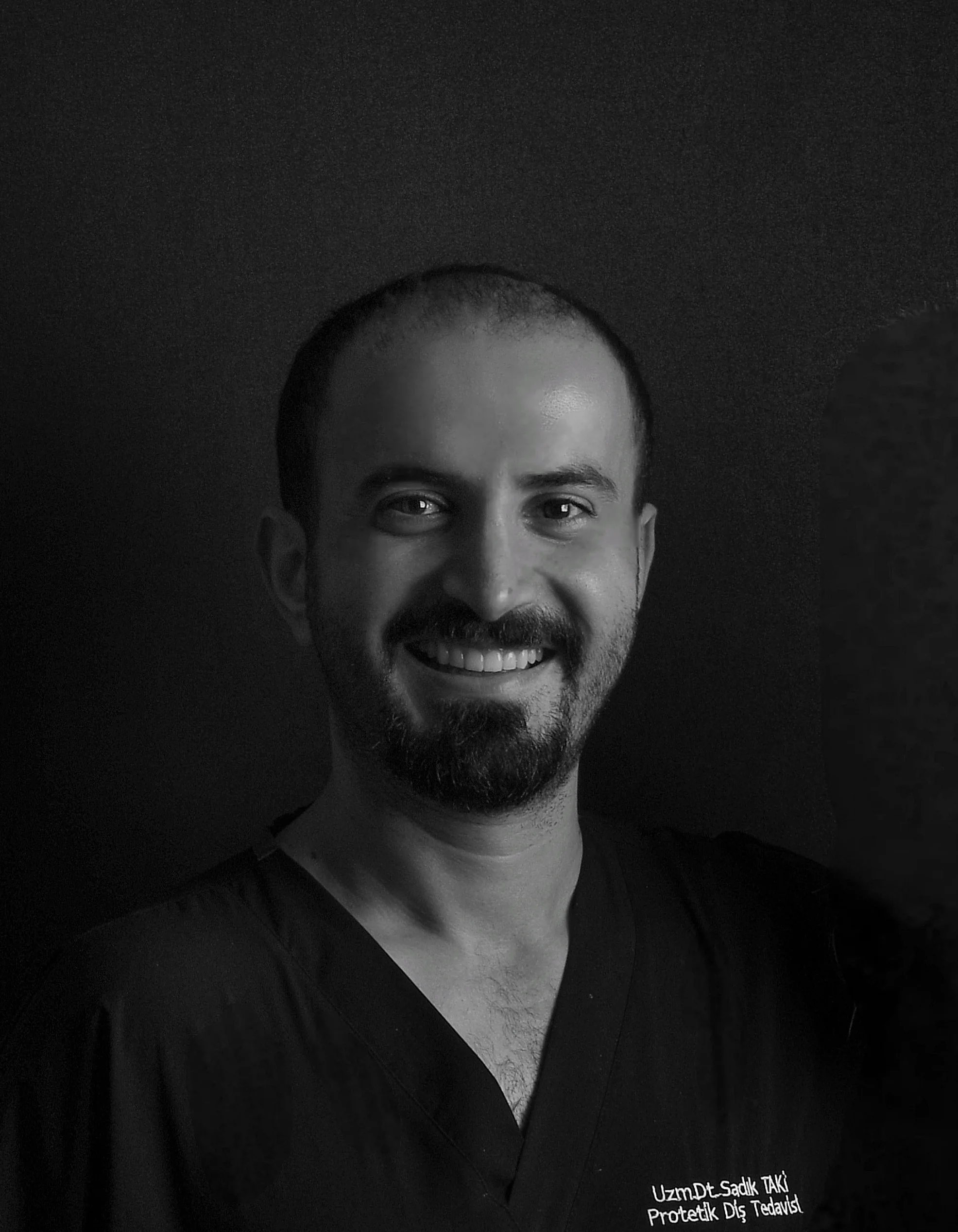
Of all the questions implant patients ask me, the one that matters most for long-term success is rarely the one they raise first. They want to know how strong the implant is, or how natural it will look — but the factor that decides whether an implant lasts five years or fifty is the health of the tissue around it. Peri-implantitis is the term for inflammation that destroys the bone supporting an implant, and it is the leading biological cause of late implant loss. The aetiology of this condition was the subject of a review I co-authored on the etiologic factors causing peri-implantitis, published in Acta Scientiae Dentium (2018), and the principles in that paper continue to shape how we protect implants at Taki Dent. This is research by Dr. Sadık Taki applied directly to patient care.
Mucositis vs Peri-Implantitis: Two Stages of One Problem
Inflammation around an implant exists on a spectrum, and distinguishing the stages is clinically essential because one is reversible and the other is not:
Peri-implant mucositis
Inflammation limited to the soft tissue around the implant. The gum bleeds on probing and may look red or swollen, but the underlying bone is intact. At this stage the condition is fully reversible with professional cleaning and improved home care.
Peri-implantitis
Inflammation has spread beyond the soft tissue and is destroying the supporting bone. This produces deepening pockets and radiographic bone loss. Bone that is lost does not return on its own, so treatment aims to halt progression rather than fully reverse it.
The single most important takeaway for patients is this: mucositis is the warning stage. Caught and treated there, the implant is protected. Allowed to progress to peri-implantitis, the situation becomes far harder to manage. Nearly everything in prevention is about staying on the reversible side of that line.
Why Implants Become Inflamed: The Aetiologic Factors
Peri-implantitis is a multifactorial disease. A bacterial biofilm is the primary driver — the inflammation is fundamentally a host response to microbial plaque accumulating at the implant–tissue interface — but several factors raise an individual's susceptibility or accelerate the process. In the review I co-authored, we grouped these contributing factors as follows:
- Bacterial biofilm: The primary cause. Plaque accumulating around the implant neck provokes a host-mediated inflammatory response. Without effective plaque control, every other factor is amplified.
- History of periodontitis: Patients who lost teeth to gum disease carry the same susceptible biology and bacterial flora to their implants, and have a clearly elevated risk of peri-implantitis.
- Smoking: Tobacco impairs the blood supply and immune response of the peri-implant tissues, raising both the likelihood and the severity of inflammation.
- Residual cement: Excess cement left beneath a cemented crown acts as a chronic irritant and biofilm trap — one of the most common, and most preventable, local triggers.
- Uncontrolled diabetes: Poorly controlled blood glucose impairs healing and the immune response, increasing peri-implant disease risk. Well-controlled diabetes is far less of a concern.
- Occlusal overload & poor prosthetic design: Excessive or poorly distributed bite forces and bulky, hard-to-clean prosthetic contours contribute to marginal breakdown and bone stress around the implant.
These factors rarely act alone. A smoker with a history of periodontitis and a cement-retained crown carries a far higher combined risk than the sum of any one factor — which is precisely why prevention has to address several fronts at once.
Prevention Starts Before the Implant Is Placed
The most effective peri-implantitis treatment is never needing one. A large part of prevention is decided at the planning and surgical stages, long before the patient takes the implant home:
-
Stabilise gum health first
Active periodontal disease is brought under control before any implant is placed. Putting an implant into an unstable, inflamed mouth simply transfers the problem to a new site.
-
Manage modifiable risk factors
Smoking cessation, optimised diabetic control, and a documented hygiene baseline turn high-risk patients into manageable ones. I treat these as prerequisites, not afterthoughts.
-
Choose a cleanable restoration design
Where it is technically appropriate, I favour screw-retained restorations over cemented ones to eliminate residual-cement risk entirely, and I design emergence profiles that the patient can actually keep clean at home.
-
Ensure adequate soft tissue and positioning
A band of healthy, attached gingiva around the implant neck and correct three-dimensional implant positioning both reduce the long-term inflammation risk — points I explore further in my work on osseointegration and long-term implant outcomes.
Maintenance: The Part Patients Control
Once an implant is restored, day-to-day prevention passes largely into the patient's hands, supported by a structured professional recall. The combination of effective home cleaning and regular maintenance visits is, in my clinical experience and across the broader literature, the most reliable defence against peri-implantitis:
For patients treated abroad, this maintenance principle is non-negotiable. An excellent implant placed in Antalya still needs a maintained relationship with a local hygienist back home, plus periodic review. We build that handover into every treatment plan rather than treating the fitted crown as the end of care. You can read more on these standards in my guide to clinical standards for UK dental-tourism patients, and the same maintenance logic underpins my protocol for preventing long-term implant failure.
Frequently Asked Questions
What is the difference between peri-implant mucositis and peri-implantitis?
Mucositis is reversible inflammation of the soft tissue only, with bleeding but no bone loss. Peri-implantitis is the advanced stage where the inflammation has reached the supporting bone, causing bone loss that cannot be fully reversed.
Can a peri-implantitis infection be treated and the implant saved?
Early mucositis usually resolves completely with professional cleaning and better hygiene. Established peri-implantitis can often be managed with decontamination, but outcomes are less predictable the further it has advanced — which is why early detection through maintenance matters so much.
Does leftover dental cement really cause peri-implantitis?
Yes — excess cement beneath a cemented crown is a well-recognised local trigger. Screw-retained restorations or meticulous cement removal substantially reduce this risk.
The themes in this article are drawn from peer-reviewed work; you can review the full body of Dr. Taki's publications, including the peri-implantitis aetiology review that underpins this guidance. None of the above is a substitute for an individual clinical assessment — every implant and every mouth is different.