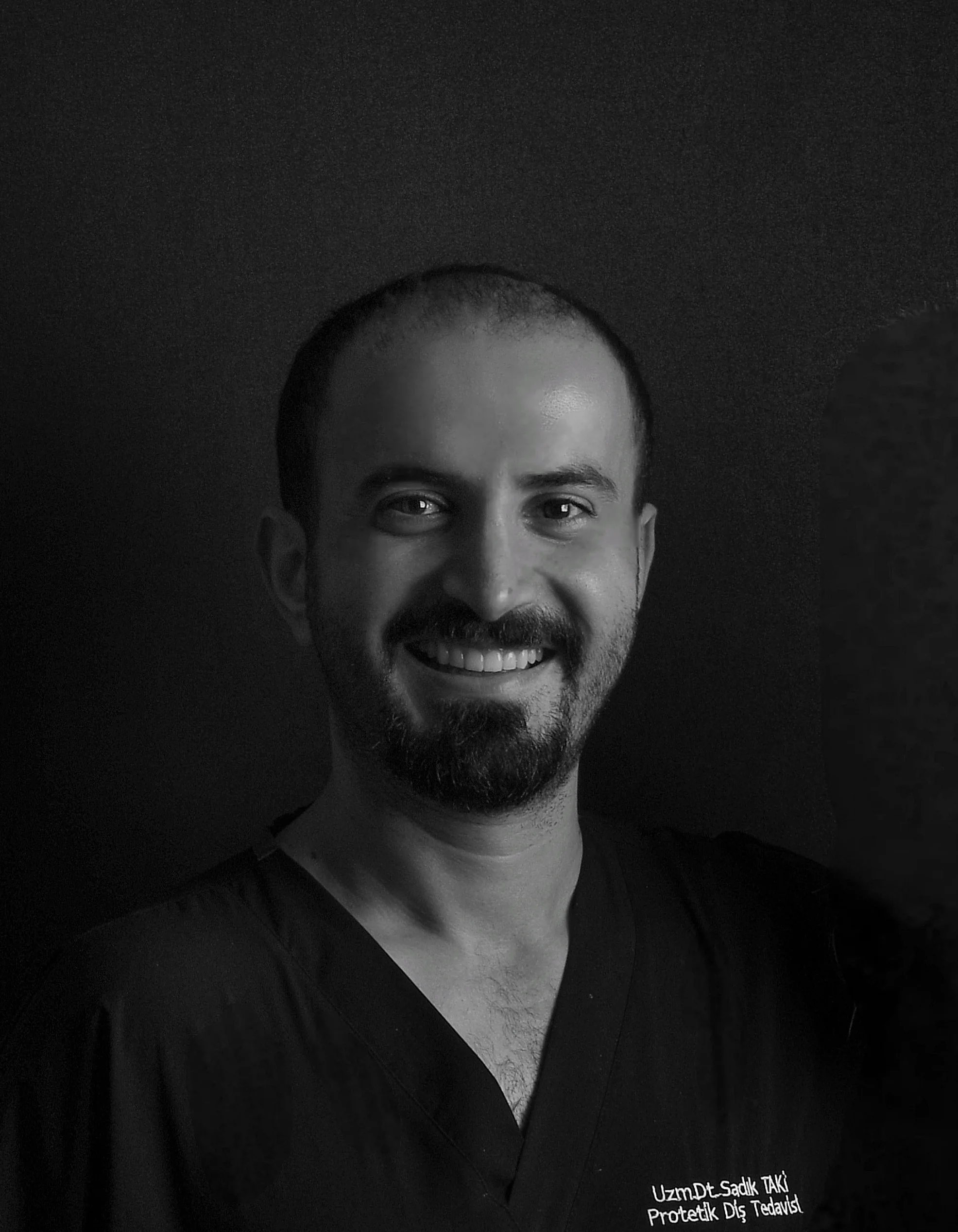
The published literature reports implant survival rates of 95–97% at 10 years for well-selected patients treated at high-quality centres. But failure rates at lower-quality clinics, or in poorly selected patients, are substantially higher. My research on peri-implantitis aetiology, published in Acta Scientiae Dentium (2018), and my retrospective cohort work on marginal bone loss — the most-cited of my 17 publications — directly inform the protocol I use at Taki Dent to minimise failure risk over the long term.
Stage 1: Patient Selection and Risk Assessment
Preventing failure starts before the first incision. The risk factors I assess at the initial consultation are:
Patients who have lost teeth to periodontitis are at elevated risk of peri-implantitis. Periodontal status must be stabilised and maintained before implants are placed.
Smokers have 2–3× the failure rate of non-smokers. I require smoking cessation for a minimum of four weeks pre-surgery and throughout the healing period.
Controlled diabetes (HbA1c <8%) is manageable. Uncontrolled diabetes is a relative contraindication to elective implant surgery.
Managed with night guard and careful prosthetic design. Unmanaged bruxism generates prosthetic component fatigue and risks fixture overloading.
Patients who cannot maintain oral hygiene will develop peri-implant mucositis, which progresses to peri-implantitis without intervention.
Bisphosphonates impair bone remodelling. Drug holiday and specialist assessment required before elective implant surgery.
Stage 2: Surgical Technique Factors
Several intraoperative decisions have direct bearing on long-term outcomes:
-
Atraumatic drilling protocol
Bone overheating during osteotomy — caused by insufficient irrigation, excessive drilling speed, or dull drills — causes thermal necrosis of the peri-implant bone. I use copious saline irrigation, single-use drills, and controlled speed to prevent this.
-
Implant positioning
The implant platform should be placed 1–2 mm below the crestal bone level (sub-crestal placement) to preserve the biological width and minimise early crestal bone loss. Platform switching — using an abutment narrower than the implant diameter — further reduces crestal bone loss by relocating the implant-abutment interface away from the crestal bone.
-
Primary stability threshold
I will not proceed with immediate loading below 35 Ncm insertion torque. For delayed loading, even moderate primary stability is acceptable, but cases with very low stability values may require extended healing times.
-
Flap design and tissue management
Adequate attached gingiva around the implant neck reduces peri-implant inflammation risk significantly. Where attached tissue is insufficient, a connective tissue graft at the time of implant placement or second stage is worthwhile.
Stage 3: Prosthetic Design Considerations
A poorly designed prosthesis can cause an implant that has integrated successfully to fail over time. The prosthetic factors I pay most attention to are:
- Cantilever length: In implant-supported bridges, cantilever extensions amplify forces on the distal implant. I limit posterior cantilevers to less than 1.5× the anteroposterior spread of the implant platform.
- Occlusal scheme: Mutually protected occlusion with anterior guidance is preferred for implant prostheses — distributing occlusal forces along the long axes of the implants and minimising lateral forces.
- Screw access vs cemented prostheses: Excess cement beneath a cemented crown is a primary cause of peri-implantitis. For posterior implants where retrievability is possible, I increasingly prefer screw-retained prosthetics, which eliminate this risk entirely.
- Prosthetic material selection: Zirconia frameworks have excellent fracture resistance. Metal-ceramic is acceptable. Full acrylic prostheses degrade faster and generate higher impact forces — I use these only for provisionals.
Stage 4: The Long-Term Maintenance Programme
Peri-implant disease develops slowly — often asymptomatically — over years. Without regular professional monitoring, it can progress to significant bone loss before the patient notices any symptoms. The evidence from my published retrospective study on implant-retained overdentures, as well as broader systematic review data, is consistent: supported maintenance substantially reduces peri-implantitis incidence.
Early Warning Signs Every Patient Should Know
Patient-reported symptoms can prompt early intervention before significant bone loss occurs. Patients should contact us immediately if they notice:
Early-stage peri-implant mucositis is completely reversible with professional intervention. Once it progresses to peri-implantitis with radiographic bone loss, management becomes substantially more complex and outcomes less predictable. The message is simple: if something feels different, act on it promptly.