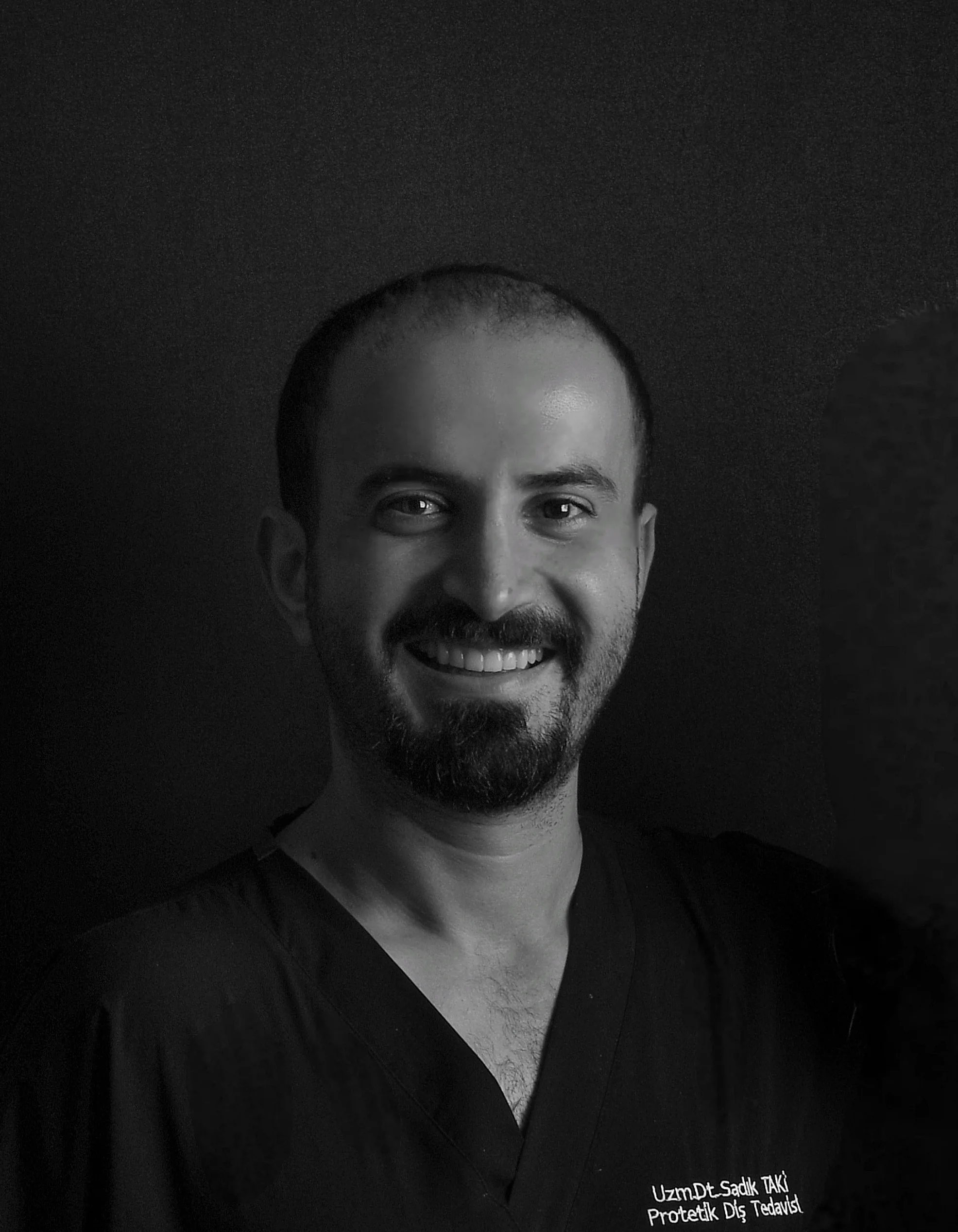
For patients who have lost all of their teeth in one jaw, an implant-retained overdenture offers a transformative middle path: the stability and chewing confidence that come from implants, combined with the cleansability and lower cost of a removable prosthesis. This is a clinical area I have studied directly. A retrospective cohort study I co-authored on the maintenance requirements and marginal bone loss associated with implant-retained overdentures, published in Clinical Oral Investigations (2022), followed patients fitted with bar and locator-retained dentures and recorded the prosthetic maintenance they needed over the years of follow-up. That work shapes how, at Taki Dent, we plan not just the fitting of an overdenture but the years of care that follow it. You can review the full body of research by Dr. Sadık Taki on the publications page.
What an Implant-Retained Overdenture Actually Is
An overdenture is a removable denture that clips onto a small number of implants — typically two to four in the lower jaw and four or more in the upper jaw. Unlike a conventional denture, which rests on the gums and relies on suction and adhesive, an overdenture is mechanically held in place by attachments fixed to the implants. The patient still removes it for cleaning, but in function it stays firmly seated. The two most common attachment systems are:
Locator (stud) attachments
Each implant carries an individual stud abutment, and the denture houses a nylon insert that snaps over it. Locators are low-profile, forgiving of slightly divergent implant angles, and simple to maintain — the retentive inserts are designed to be replaced.
Bar attachments
A custom bar splints the implants together, and the denture clips onto it via clips or riders. Bars distribute load across the implants and can offer excellent retention, at the cost of a more involved cleaning routine and more demanding laboratory work.
Neither system is universally "better." The choice depends on the number and position of implants, the available restorative space, the opposing dentition, and the patient's own ability to clean around the components. Part of the prosthodontist's job is matching the attachment to the person.
Why Maintenance Is Built Into the Design
The single most important thing for a patient to understand is that maintenance is not a sign that something has gone wrong — it is a planned, expected part of how overdentures work. The retentive components are deliberately made from wearing materials so that the implants themselves are protected. When a nylon insert loses its grip, it is the insert that has done its job by absorbing the wear, not the implant. Replacing it is a quick, routine task.
In the cohort study I co-authored, patients were reviewed at scheduled recall appointments, and a range of routine prosthetic maintenance events — adjustments to the fit, attention to the soft tissues, and servicing of the retentive components — were recorded as part of normal care. This is the central message I give every overdenture patient: the prosthesis is designed to be serviced, and a planned recall schedule is how that servicing stays small and predictable rather than turning into an emergency.
The Common Maintenance Events — and What They Mean
Over the life of an overdenture, a handful of maintenance needs recur. Recognising them ahead of time turns them from worrying surprises into routine appointments:
- Retentive insert replacement: Nylon locator inserts and bar clips wear with daily insertion and removal. Swapping them restores the original 'snap' and is typically a chairside procedure of a few minutes per implant.
- Relining the denture base: The gum ridge beneath the denture remodels slowly over the years. A reline re-adapts the fitting surface so the load stays balanced between the implants and the soft tissues.
- Occlusal adjustment: As the bite settles and the denture wears, small refinements keep the chewing forces even and prevent overloading any single implant.
- Component tightening or servicing: Abutment screws and bar fixings are checked and, if needed, re-tightened to the correct torque to keep the foundation stable.
- Soft-tissue review: The gums around the implants are examined for inflammation so that early changes are managed before they affect the supporting bone.
Marginal Bone and the Long-Term Outlook
Alongside prosthetic upkeep, the bone around the implants is the other thing we monitor carefully. A small, gradual change in marginal bone level over the first years is a well-recognised feature of implant dentistry; the goal of long-term care is to keep the bone stable beyond that initial settling and to catch any accelerating loss early. This is why periodic radiographs and soft-tissue assessment are part of the recall protocol rather than optional extras.
The factors that govern this stability — implant integration, hygiene, load distribution and inflammation control — overlap heavily with implant care generally. I explore them in more depth in my articles on the factors that drive osseointegration and on preventing implant failure over the long term. For overdenture patients specifically, the practical takeaway is that good daily cleaning plus a kept recall appointment are the two habits that most strongly support a stable result.
Daily Care at Home
What the patient does every day matters as much as what happens in the clinic. The routine is straightforward but non-negotiable: remove the denture and clean it over water with a denture brush and non-abrasive cleaner; clean around each implant abutment with a soft brush and any interdental aids we recommend; and leave the denture out overnight where advised, to give the tissues a rest. Locator and bar components benefit from gentle, thorough cleaning — debris trapped against an attachment is a common, avoidable cause of both irritation and accelerated wear.
Honest expectation-setting is part of this. An implant-retained overdenture is one of the most life-changing restorations in dentistry for an edentulous patient, but it is a partnership: the clinic provides the planning, the surgery and the recall servicing, while the patient provides the daily care and keeps the appointments. When both halves are in place, these prostheses serve reliably for many years — and the maintenance, far from being a flaw, is precisely what makes that longevity possible. There are no guarantees in any surgical or prosthetic treatment, and individual outcomes vary; an in-person assessment is the only way to plan responsibly for a specific patient.