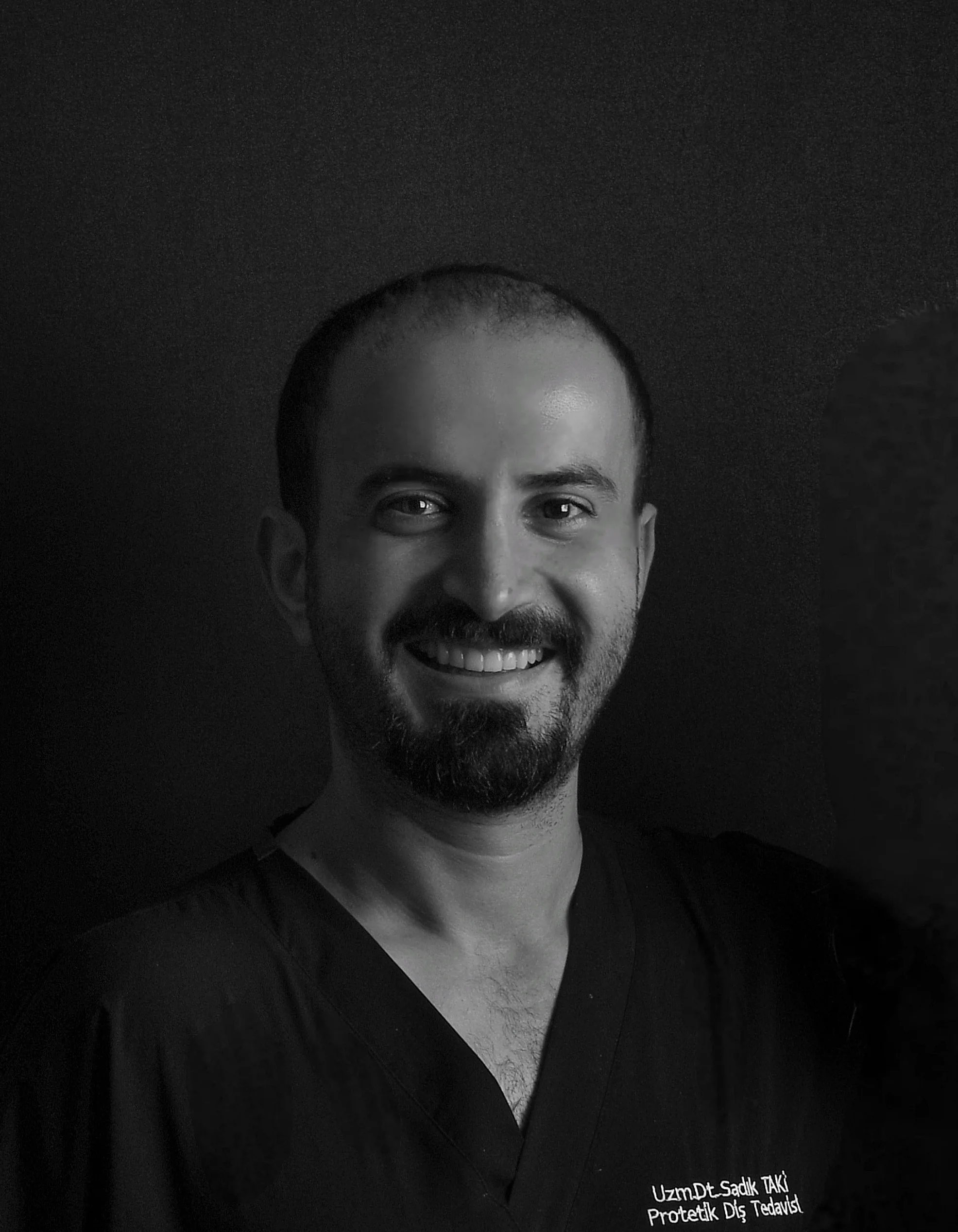
Almost every patient who comes to Taki Dent asking about a smile makeover has already encountered this debate online. By the time they sit in the consultation chair, they have read that E-max is "more natural" and zirconia is "stronger," and they are hoping I will give them a clear winner. The honest answer is that neither material is universally superior — the right choice depends on clinical factors that no website can assess without examining the patient.
The Optical Properties: Where E-max Wins
E-max is a lithium disilicate glass-ceramic. Its crystalline structure allows light to pass through and scatter in a manner remarkably similar to natural tooth enamel. In spectrophotometric studies, lithium disilicate closely mimics the fluorescence, translucency, and optical depth of natural teeth — qualities that monolithic zirconia, in its standard white form, cannot match.
For patients with naturally translucent, light-coloured teeth, E-max is almost always my first recommendation. The veneer integrates optically with the underlying dentition in a way that zirconia cannot replicate. My 3-year follow-up study on finish line designs and material types, published in the European Annals of Dental Sciences (2023), confirmed that marginal integrity and patient satisfaction metrics are excellent with lithium disilicate when preparation and cementation protocols are observed correctly.
The limitation of E-max becomes apparent when patients want a dramatically whiter result — more opaque than their natural tooth shade. Because E-max transmits light, a very dark underlying tooth can compromise the final colour if tooth preparation depth is insufficient. In these cases, you either need to prepare deeper (removing more natural tissue) or switch to a more opaque material.
Zirconia: Strength, Opacity, and Evolving Options
Zirconia has a flexural strength of 900–1200 MPa in its monolithic form — roughly three times that of lithium disilicate. For patients with a history of bruxism, heavy occlusal loading, or short clinical crowns where veneer thickness must be minimal, this mechanical advantage is clinically significant.
The earlier generation of monolithic zirconia had a distinctly white, slightly chalky appearance that was immediately recognisable as artificial. However, modern multi-layered and high-translucency (HT) zirconia products have improved substantially. They can now achieve acceptable aesthetics in the anterior region, though in my clinical assessment they still do not match the optical warmth of a well-executed E-max veneer on a patient with suitable underlying dentition.
Zirconia is also the material of choice when the patient has discoloured dentition — tetracycline staining, internal resorption discolouration, or heavily restored teeth — because its inherent opacity reliably masks the underlying colour without requiring aggressive preparation.
Tooth Preparation: The Most Irreversible Decision
This is the aspect of veneer treatment that patients most often underestimate. Both materials require some removal of natural tooth structure. The question is: how much?
E-max Preparation
- · Incisal reduction: 1.0–1.5 mm
- · Labial reduction: 0.3–0.7 mm
- · Finish line: chamfer or feather edge
- · Minimum thickness: 0.3 mm possible in low-stress areas
Zirconia Preparation
- · Incisal reduction: 1.5–2.0 mm
- · Labial reduction: 0.5–0.8 mm
- · Finish line: 0.8–1.0 mm shoulder recommended
- · Minimum thickness: 0.5–0.6 mm required
For patients with teeth close to the ideal shape and position, I always favour minimal preparation — and E-max allows me to do exactly that. For patients requiring significant recontouring, length addition, or masking of discolouration, the additional preparation depth required for zirconia becomes proportionally less significant.
I also routinely use digital mock-ups and wax-ups before any preparation takes place. This allows the patient to see and approve the planned outcome before any tooth structure is removed — a step I consider mandatory, not optional, for any aesthetic case.
Cementation: Where Failures Happen
The single most common cause of veneer failure I see is not material choice — it is cementation protocol. E-max requires resin cement and meticulous adhesive bonding with HF etching and silane application. When this protocol is followed correctly, bond strengths are exceptional. When it is cut short, marginal breakdown and debonding occur within two to three years.
Zirconia presents a different challenge: its surface is biologically inert and does not etch with hydrofluoric acid. Proper cementation requires sandblasting, MDP-containing primers, and appropriate resin cements. This is non-negotiable — and is a step that requires material knowledge that not every clinic possesses.
My Clinical Recommendation Framework
| Clinical Scenario | My Recommendation |
|---|---|
| Natural translucent teeth, minimal colour change needed | E-max |
| Bruxism confirmed or suspected | Zirconia (or E-max with night guard) |
| Significant discolouration to mask | Zirconia |
| Minimal preparation desired | E-max |
| Short clinical crowns, heavy loading | Zirconia |
| Full smile design — maximum aesthetics | E-max (with careful case selection) |
Both materials, in experienced hands with correct protocols, produce excellent long-term results. The question to ask your clinician is not "which is better?" but "which is right for my teeth, and why?" — and you should expect a clear, evidence-based answer to that question.