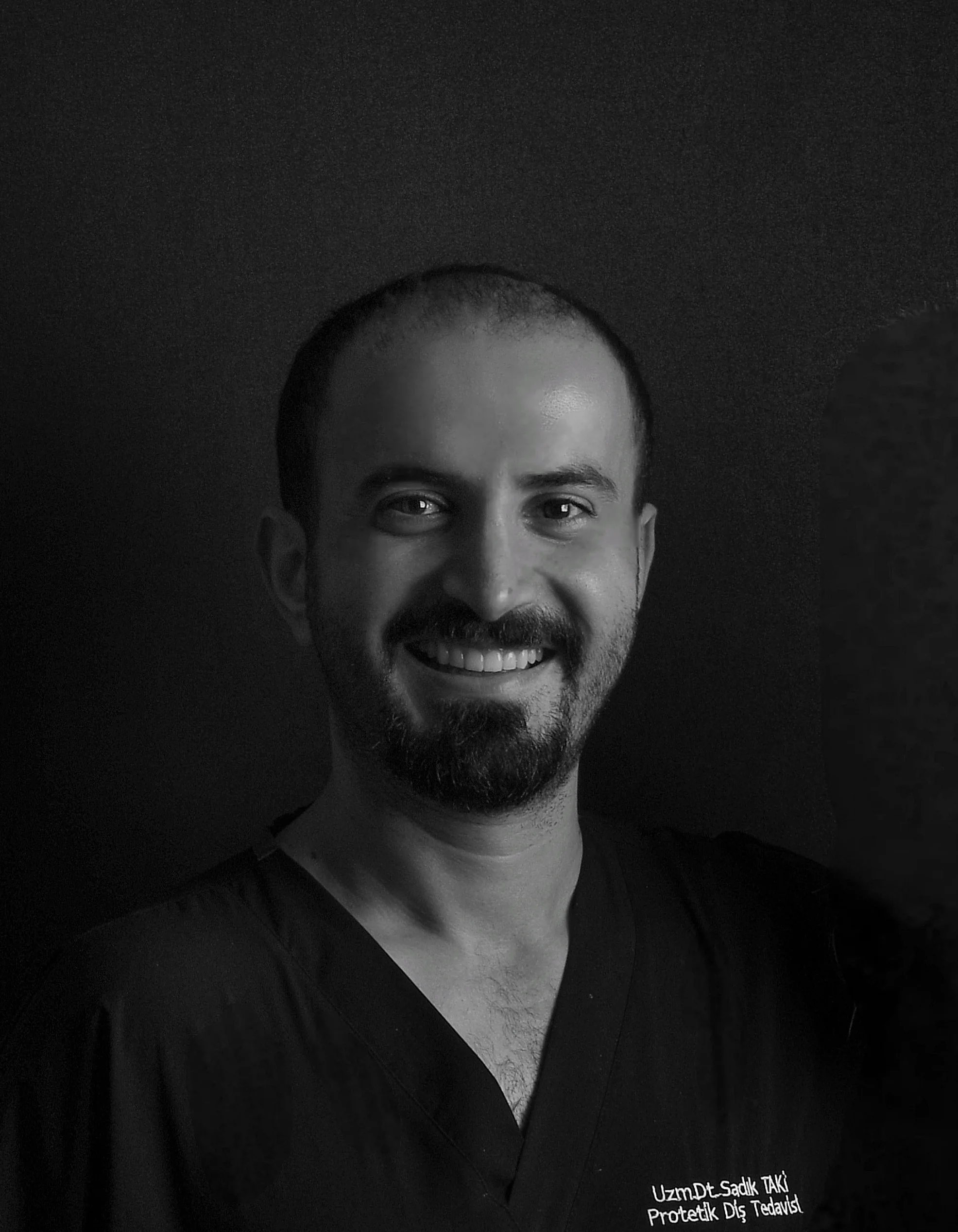
Full mouth reconstruction is among the most demanding disciplines in Prosthodontics — not because individual procedures are complicated, but because the entire dentition must function as a single integrated system. A misaligned bite, an incorrectly established vertical dimension, or a poorly sequenced treatment plan can create problems that are far harder to correct than the original condition. At Taki Dent, we invest as much clinical time in planning as we do in treatment.
What Constitutes a Full Mouth Reconstruction?
I define full mouth reconstruction as any treatment plan requiring the restoration of occlusal function and aesthetics across both arches, involving six or more teeth. Common presentations include:
- Severe erosion from gastric reflux (GORD) or dietary acids
- Generalised attrition from long-term bruxism
- Multiple failing or failed restorations
- Collapse of occlusal vertical dimension (OVD)
- Combined periodontal disease and tooth loss requiring implants and crowns
- Congenitally missing teeth with malocclusion
Each of these presentations has different aetiological factors that must be addressed — not just masked. Treating the restorations without addressing the cause of failure means the new restorations will fail too.
Phase 1: Comprehensive Diagnostic Records
Before I commit to a treatment plan, I need a complete diagnostic dataset. This typically includes:
Full periodontal charting
Probing depths, bleeding on probing, recession, furcation involvement. No restoration is predictable on a compromised periodontal foundation.
CBCT scan
Bone volume for implant planning, root morphology, sinus anatomy, and detection of periapical pathology not visible on periapical radiographs.
Mounted study casts
Alginate impressions poured in stone and articulated on a semi-adjustable articulator at the patient's existing centric relation. Essential for 3D occlusal analysis.
Face-bow transfer
Transfers the maxillary arch relationship to the condylar axis so articulated models accurately reflect the patient's jaw kinematics.
Photographic records
Full-face, retracted, and lateral photographs for aesthetic analysis. Smile line, midline, incisal edge position, and gingival architecture are all assessed.
TMJ assessment
Range of motion, click/crepitus, muscle tenderness. Undiagnosed TMD creates post-treatment complications that are difficult to distinguish from treatment failure.
The Vertical Dimension Analysis
Occlusal vertical dimension (OVD) is the height of the lower face when the teeth are in contact. In patients with severe attrition or tooth loss, OVD is often reduced — the face appears "collapsed," and the jaw muscles are chronically shortened, which can cause tenderness and TMJ symptoms.
My published case reports in the Annals of Medical Research (2020) documented two patients with significant OVD loss successfully rehabilitated with full-arch reconstructions, and the process for establishing the correct new OVD is worth explaining in detail. I use several reference measurements:
- Freeway space (physiological rest position): The mandible at rest should be 2–4 mm below OVD. I measure from the bridge of the nose to the chin at rest and subtract this from the proposed restorative OVD.
- Phonetic tests: Certain sounds — particularly 'F,' 'V,' and sibilants — require specific incisor relationships. If these sounds are produced normally at the proposed OVD, it strongly supports that dimension.
- Aesthetic proportions: Lower face height at proposed OVD should achieve harmonious facial thirds. I overlay the patient's proposed smile design onto frontal photographs for confirmation.
Before committing to the final restorations, I always trial the proposed OVD with a provisional acrylic reconstruction that the patient wears for a minimum of eight weeks. This allows the musculature to adapt, confirms TMJ tolerance, and validates the aesthetic outcome before any definitive ceramic work is fabricated.
Staged Treatment Sequencing
A full mouth reconstruction is never completed in a single phase. The standard sequencing I follow is:
The Challenges Nobody Discusses
Patient compliance is, in my experience, the most underestimated variable in complex reconstruction cases. A patient who cannot commit to periodontal maintenance appointments, who does not wear their night guard, or who returns to the dietary acid exposure that eroded their teeth in the first place will re-create the original problem regardless of how expertly the restorations are made.
I now spend as much time in the initial consultation discussing patient responsibility as I do explaining treatment options. A full mouth reconstruction is a long-term partnership between the clinician and the patient — and the outcomes data consistently show that success rates are significantly higher when patients understand and accept their role in maintaining the result.