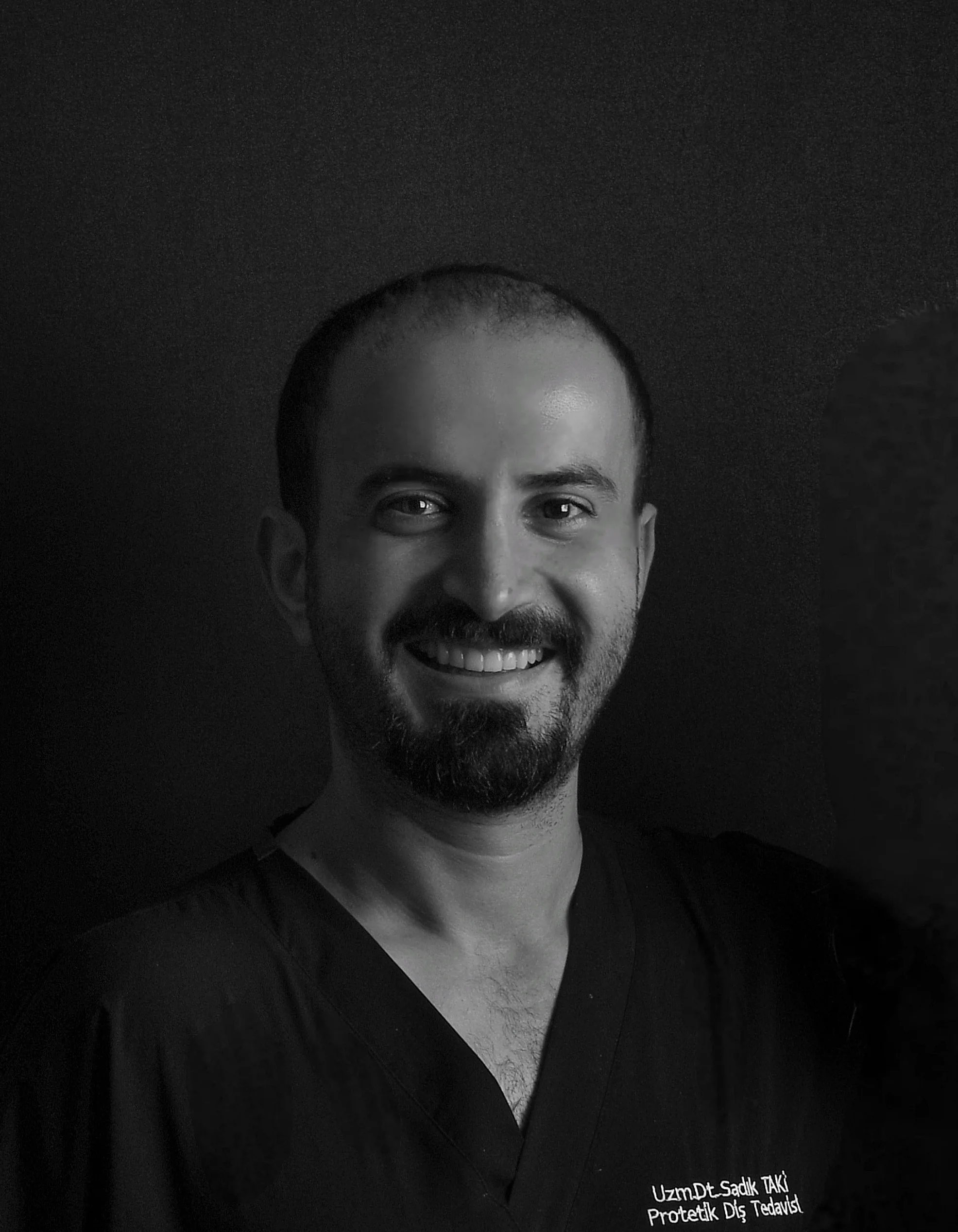
As a Prosthodontist who has treated hundreds of fully edentulous patients at Taki Dent, I am frequently asked: "Should I have All-on-4 or All-on-6?" The honest answer is that the question cannot be settled by a website comparison — it requires a CBCT scan and a clinical assessment. What I can offer here is the decision framework I use in practice, so patients understand what actually drives that choice.
Why the Implant Number Matters
Both All-on-4 and All-on-6 involve placing a full-arch fixed prosthesis supported by a small number of implants. The difference is not cosmetic — it is biomechanical. More implants distribute occlusal load across a greater surface area of bone. This matters enormously for long-term crestal bone stability, which my published research in Clinical Oral Investigations (2022) has directly examined through retrospective cohort analysis of implant-retained prosthetics.
The decision is fundamentally about matching the prosthetic load to the patient's bone capacity. Get that wrong in either direction — placing six implants where four would suffice, or placing four where six are needed — and you are either adding unnecessary surgical risk or creating a biomechanical situation that will cause bone loss over time.
Step 1: The CBCT Scan Is Non-Negotiable
I will not plan an All-on-4 or All-on-6 case without a cone-beam computed tomography (CBCT) scan. A panoramic X-ray alone is insufficient. The CBCT gives me three things I cannot assess otherwise:
- Bone height and width: Exact residual bone dimensions at each potential implant site, particularly in the posterior maxilla where sinus pneumatisation is common.
- Bone density (Hounsfield units): I measure bone quality in the D1–D4 classification. D1 and D2 bone can support the higher loads of an All-on-4 angled posterior implant. D3 bone gives me pause; D4 bone almost always pushes me towards more implants with a staged loading protocol.
- Anatomical landmarks: Position of the inferior alveolar nerve, mental foramen, and maxillary sinus floor — all of which constrain implant placement angles and lengths.
Step 2: Assessing Bone Density
The Lekholm and Zarb bone quality classification (D1–D4) remains clinically relevant, but I complement it with Hounsfield unit measurements from the CBCT software. In practical terms:
| Bone Type | HU Range | My Typical Approach |
|---|---|---|
| D1 (Dense cortical) | >1250 HU | All-on-4 viable — excellent primary stability |
| D2 (Cortical + trabecular) | 850–1250 HU | All-on-4 standard; All-on-6 if bruxism present |
| D3 (Fine trabecular) | 350–850 HU | Strong preference for All-on-6; review loading protocol |
| D4 (Sparse trabecular) | <350 HU | All-on-6 minimum; consider bone augmentation + delayed loading |
The maxilla consistently presents softer bone than the mandible, which is why I more often recommend All-on-6 in the upper jaw. The mandible, particularly in the interforaminal region, typically offers excellent bone density and is well-suited to All-on-4 protocols.
Step 3: Bruxism — the Most Underestimated Factor
Bruxism (nocturnal tooth grinding) generates occlusal forces up to 900N — far exceeding the 150–250N of normal chewing. An All-on-4 bridge distributes this load across four implant fixtures and their abutment interfaces. The cantilever effect at the distal end of the prosthesis amplifies these forces significantly.
For any patient with confirmed or suspected bruxism, I will almost always recommend All-on-6. The additional two posterior implants reduce cantilever length, decrease per-implant load, and substantially lower the risk of prosthetic component fracture. I also insist on a rigid night guard once the prosthesis is fitted and healing is complete.
Step 4: The Angle of the Posterior Implants
In the classic All-on-4 configuration, the two posterior implants are placed at 30–45° angles to avoid the maxillary sinus or inferior alveolar nerve. This angulation is biomechanically acceptable when bone quality is good and the patient does not brux. However, angled implants generate greater bending moments at the implant-abutment junction — an area my published research has specifically examined in the context of marginal bone loss.
When I can achieve four or more axially placed implants — for example, following a sinus augmentation procedure in the maxilla — I prefer axial positioning throughout the arch. All-on-6 with axial implants is biomechanically superior to All-on-4 with acutely angled posterior fixtures, all else being equal.
Age and Long-Term Planning
A 45-year-old patient planning All-on-4 should expect to need at least one prosthetic replacement over their lifetime, as even the best zirconia frameworks have finite fatigue life under occlusal loading. For younger patients and those in professions where aesthetics matter, I tend to plan for All-on-6 as a first-choice option — the superior load distribution extends prosthetic longevity and reduces the likelihood of requiring revision surgery.
Conversely, for older patients who are medically compromised and for whom surgical time and trauma should be minimised, All-on-4 under IV sedation can be an excellent, pragmatic choice that delivers a transformative outcome with reduced operating time.
Summary: My Decision Checklist
Factors pushing me towards All-on-6:
- D3 or D4 bone quality on CBCT
- Confirmed bruxism or parafunction
- Maxillary arch (consistently softer bone)
- Younger patient (age <55) with long-term load considerations
- History of implant failure in the same patient
- High BMI + significant occlusal forces
Factors where All-on-4 is well-supported:
- D1 or D2 mandibular bone, good volume
- No bruxism history
- Medically complex patient requiring reduced surgical time
- Interforaminal mandible with strong cortical bone
The bottom line: both protocols have excellent long-term evidence when correctly indicated. The clinical error is not in choosing one over the other — it is in applying either protocol without the diagnostic data to justify it. Every patient who books an implant consultation at Taki Dent receives a full CBCT assessment before any treatment is planned, because no recommendation I make is worth anything without that foundation.